A platform for forensic and biodiversity genomics data
BOLD Forensics manages DNA barcode records from specimen intake through sequence data, evidence files and analysis, and controls who can see and change them. BF Workbench is the part people sign in to and work in.
It was built to the requirements of forensic casework: an account of who did what, access controlled project by project, and data checked against a common standard. Those requirements go beyond what most research or laboratory information systems provide.
Built on a community standard
Records follow the Barcode Core Data Model (BCDM): 111 defined fields across specimen, collection, taxonomy, sequence and forensic groups.
Access you can account for
Accounts by invitation, two-factor sign-in, an access list for every project and dataset, and activity logged against each account.
Analysis in the same place
Identification, distances, barcode gap, diagnostic characters, phylogenetic trees and composition, all run through one shared framework.
One environment from intake to analysis
BOLD Forensics manages barcode records from the point of specimen intake through sequence data, file archiving and bioinformatics analysis, to governed access by collaborators and institutional partners.
BF Workbench brings review, intake, analysis and administration into a single working environment, so people do not move between separate systems as they work through a case or a dataset.
Forensic requirements were the design floor, not the ceiling. A system that meets chain-of-custody, audit and data-quality standards for casework is more than sufficient for research-grade biodiversity genomics.
Access control and accountability are built in
Rights are granted project by project and enforced by the service that holds the records, not only in the interface.
Accounts by invitation
Each account starts from an invitation issued by an administrator, so every account traces back to an institutional relationship.
Two-factor sign-in
Signing in needs a password and a code from an authenticator app. Passwords are stored as Argon2 hashes, and repeated failed attempts are throttled.
Access per project and dataset
You might manage one project, read another and not see a third. Record and search results are filtered to what each account may see before they leave the record service.
Activity is recorded
Record loads, edits and added files are logged against the account responsible and summarised for oversight.
Projects and datasets are the containers of work
Most work begins inside a project or dataset. Its summary shows counts, coverage and taxonomic and geographic breakdowns before anyone opens a record or starts an analysis, and it decides what each person is allowed to do next.
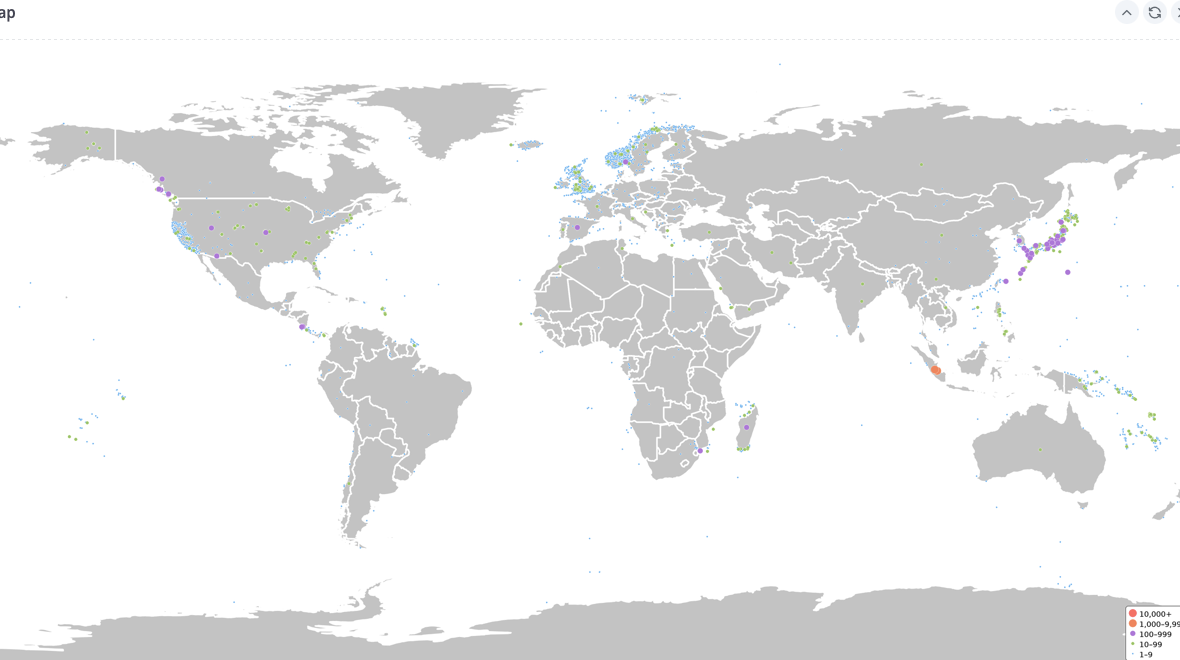
Review goes beyond tables. Maps, image libraries, alignments, trace chromatograms and sequencing reads stay tied to the same project, so an interpretation can always be checked against the underlying evidence.
Independent services with a shared data layer
-
BF Workbench
The interface people sign in to: sessions, pages, uploads and job submission.
-
Data API
Records, search, taxonomy and summaries, with access checks on every request.
PostgreSQL with Redis caching
-
Analysis service
Queues analysis jobs. Each one runs in its own container, built from a version-controlled definition.
Docker
-
BioStor
Receives every file, checks and checksums it, makes previews, and keeps the original.
Azure Blob Storage
Each service runs in its own container and can be updated independently of the others.
Origins and partners
BOLD Forensics was developed as a GEF-7 project, funded by the Global Environment Facility and supported by the United Nations Environment Programme, in close collaboration with South Africa's Department of Forestry, Fisheries and the Environment and the South African National Biodiversity Institute. Biolytica designed and built the platform and maintains it.
The work draws on the African Centre for DNA Barcoding at the University of Johannesburg, and on the Veterinary Genetics Laboratory at the University of Pretoria, which developed the RhODIS system for identifying individual rhinos from their DNA.